
What People Remember

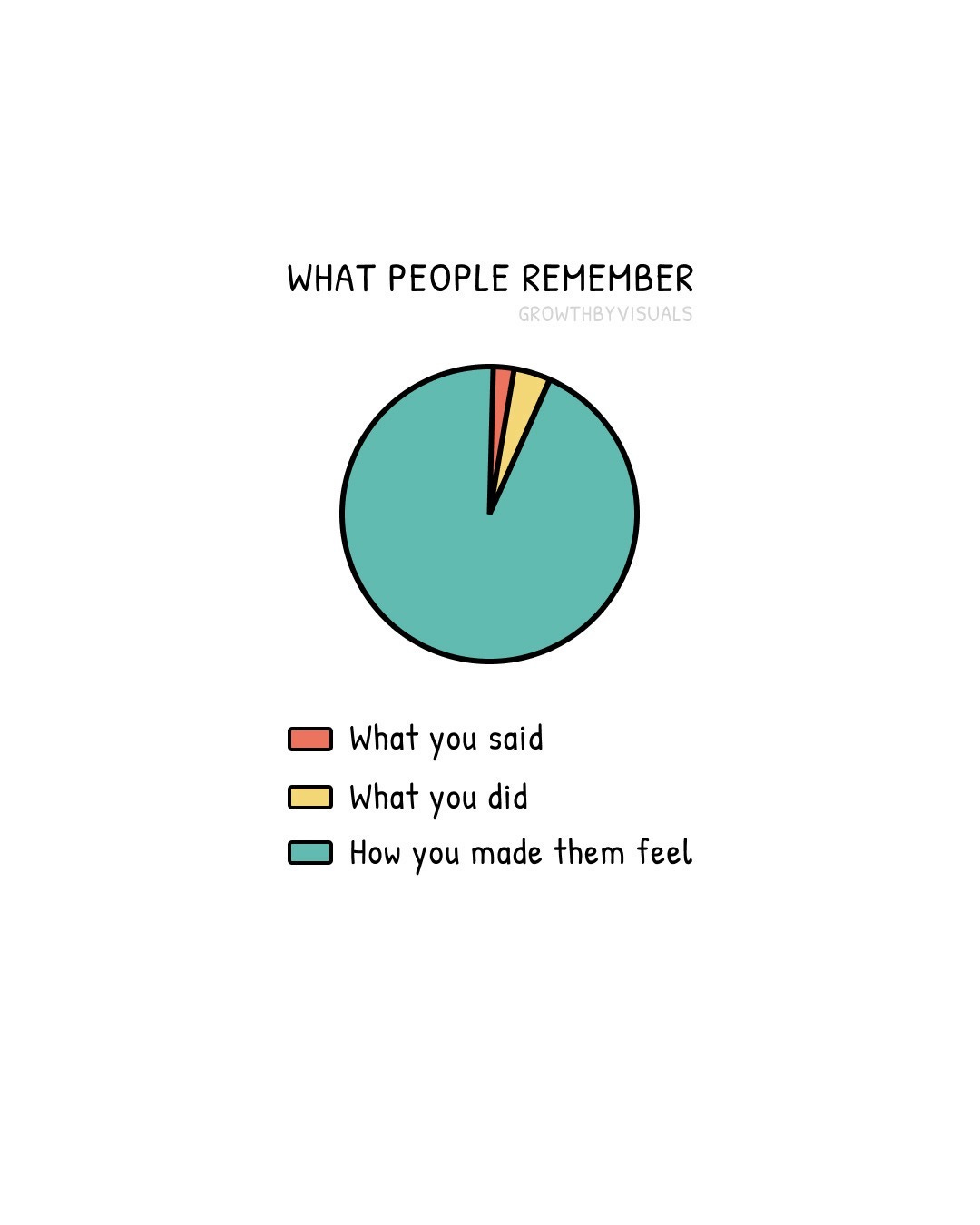
“People will forget what you said and what you did, but they will never forget how you made them feel.”
These words, famously spoken by Maya Angelou, I’ve read, seen and talked over and over again because of the truth they hold. She somehow summarised something I have known deep inside and that I see return in my work, over and over again. How we listen, how we look someone in the eye, how we are present in conversation, how we can banter and laugh together, and how we can go deep and be super vulnerable all come from how we make others feel.
In my line of work, topics such as psychological safety, inclusion, and belonging are often addressed, and the challenge remains: “how?” Because beneath all the models, frameworks, and communication theory lies one essential question: how do people feel in your presence, in your culture, and on your team?
The how is not as simple as an answer, yet the outcome should hint at what we can do to help another feel seen, heard and deeply understood.
I remember a quote that I read from Stephen Covey’s Seven Habits of Highly Effective People
“What air is to the body is to be understood to the heart”
Let those words sink in, and, most of all, ask yourself how it feels when someone understands you, really sees what you are going through. And on the other side of that, how it feels if someone doesn’t understand, or see or hear you, how painful that can be. There is evidence that shows those who feel excluded or not seen can experience that as actual physical pain. Perhaps not a surprise here when I read that I couldn’t help but relate to both instances of feeling understood and feeling misunderstood.
This clever visual by Hidde Douna, I believe, hits the nail on the head about how we can show up as leaders, team members, and, in essence, as human beings.
If we step up our game here, we create more belonging, build more trust and psychological safety, and, as a result, high performance emerges.
How we make others feel isn’t just about being more human; it’s the foundation we can build our teams, organisations, and, eventually, our impact on.