Choices...
On accidental paths, asking questions, and what we're actually passing on to our children

What is life actually supposed to be about?
Why do we earn money?
What is the endgame, the goal behind everything we do?
Why does it sometimes feel like this ‘life’ is a giant hamster wheel, one that’s impossible to step out of?
These are questions I’ve been sitting with as I think about life design, raising my children, and becoming more conscious of the systems I feel I’m stuck in — and that we’re collectively stuck in.
We live to earn money, spend it on houses, food, kids, events, holidays, and then earn more, because earning less rarely makes sense. We buy bigger places, more space, better facilities, more vacations (timed perfectly to school holidays, if you have children). We send our kids to school for the entire day, so we have more time to work, and somehow call all of this freedom.
Is it?
Freedom to work, perhaps. But freedom to live an autonomous life, one that breathes life into each day, where I’m nurturing my children with adventure and real lessons that help them become who they’re capable of being? That’s a different question.
When I think back over my own life, it never felt linear, and especially not the choices I made. I started as a medical student and became something else entirely, out of frustration with the gap between what healthcare was and what it could be. I found myself designing leadership programmes and working with teams, communities, and social impact organisations.
While I’ve been part of setting up multiple organisations, whether it was to cultivate compassion in healthcare, designing and facilitating leadership summer schools, either within healthcare and one around 20 years ago that brought together disciplines from more than 20 sectors, or training companies to help people discover their personal and collective leadership, through all of it, my central question was often: how can we make the world a better place? Along the way, I have become familiar with frameworks, methods, philosophies, and ancient wisdom: learning, teaching, and integrating, while always asking: how do I increase my impact?
Then, doing what is often considered unthinkable in medicine, I stepped away from my studies. I chose instead to focus on helping others: to maximise the potential of people and the impact they could have, to help them find their strength and their leadership, across as many sectors as I could reach. The core purpose often revolves around the theme of individual voices coming together into something collective and resonant.
Somewhere along the way, I also became a Master of Ceremonies, someone who moderates rooms and holds stages. I’ve been invited to events small and large, intimate and extravagant. It’s a craft I’ve been practising since my high school years, though I didn’t always have a name for it.
Where I once hosted ‘train the trainer’ workshops for medical students via IFMSA all over the world, I now run a programme that teaches others the art of facilitation, for those who do the important work of being change agents.
None of this was planned. It was an odd sequence of accidents, curiosity, courage, and saying yes to things that sparked something in me. It went against the norm, then I walked an unknown path, and I figured it out as I went.
A little context: I grew up in the city. The first twelve years of my life were spent right in the middle of Amsterdam, Muntplein, living above my family’s Pakistani restaurant. I learned to bike on the Kalverstraat at night when it was closed, bouncing off the metal shutters like a bowling ball with gutter rails, until I could finally hold a straight line. An unconventional way to learn, but somehow fitting for city life. I’ve lived in different parts of the city since, moved more than fifteen times, and am now on the edge of leaving it altogether.
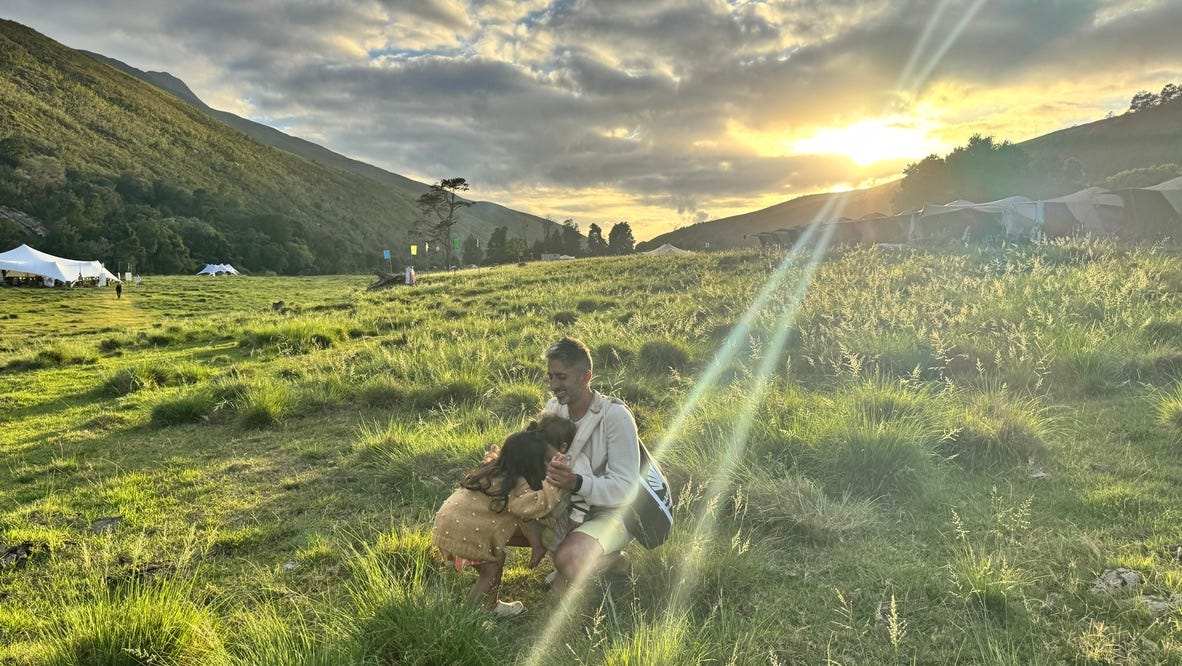
After more than forty years in the city, I find myself yearning for something slower. Nature. Stillness. The kind of pace that follows the seasons rather than the calendar. I want to step away from hustle culture and toward something more gentle, not lazy, just less frantic.
My mind is wired for productivity, yet what I crave is less stimulus and more focused creation. More moments of just being with my family — not organising, not responding, not mentally ticking off the next thing. Just present, playful, there, here.
Which makes me wonder: did the city bring me closer to myself, or pull me further away?
Did the school system I moved through help me uncover my real talents? Was this the only path, or were there others I could have walked?
These ‘would haves’ and ‘could haves’ feel somewhat pointless to dwell on. As Rumi says: “As you start to walk on the way, the way appears.”*
This has been my path, one my parents partly shaped with the best of their knowledge, and one I veered away from. Each choice has brought me here. I hold no regret about that. But it does make me ask: what about now? Where is this path leading me? And what does a system almost designed to pull us along expect of us — and what would it mean to walk a different one?
At the end of the day, we need to do what makes us happy. And if I’m honest, that’s exactly what I’m wrestling with: what actually makes me happy? Not that my circumstances should determine my happiness: my spiritual practice has taught me as much. But more, can I surrender to what life is calling me toward, and also find peace and joy in where I am right now? It’s the tension between presence and ambition. Between being here and wanting something different.
And then I look at my children.
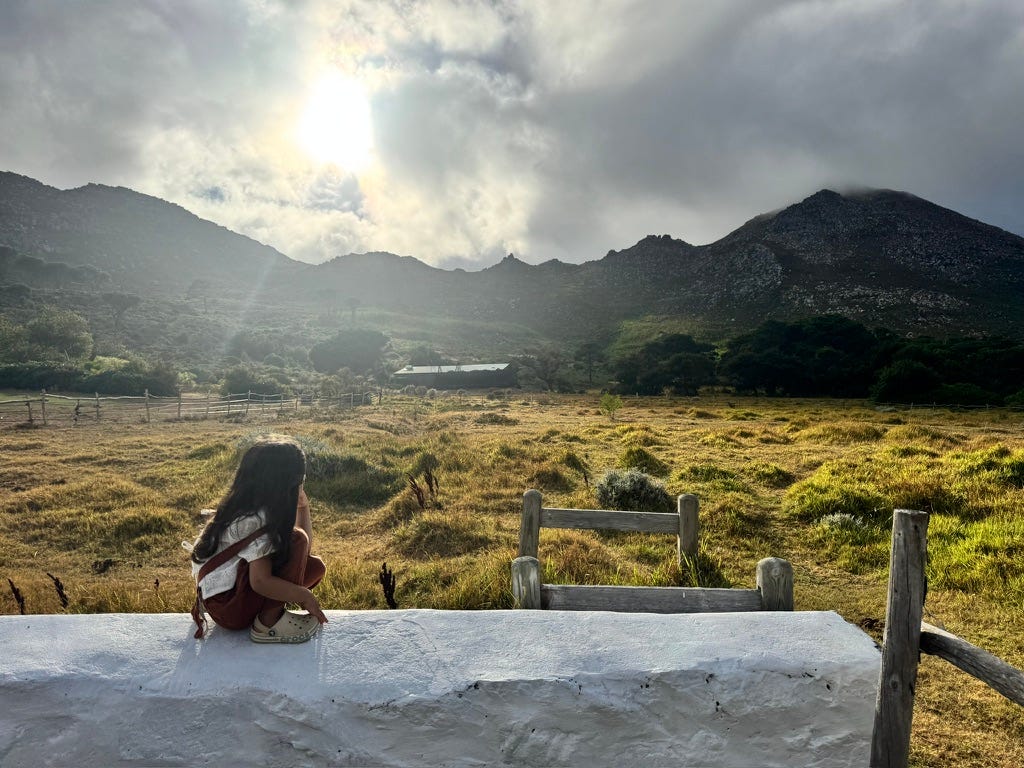
What will their path be? What do they need from me as their father? I don’t want to decide it for them or map it out in advance. I want to create the conditions for them to discover it themselves, which, in itself, feels almost impossible. What do those conditions look like? Are they the ones I see around me, or should I look elsewhere?
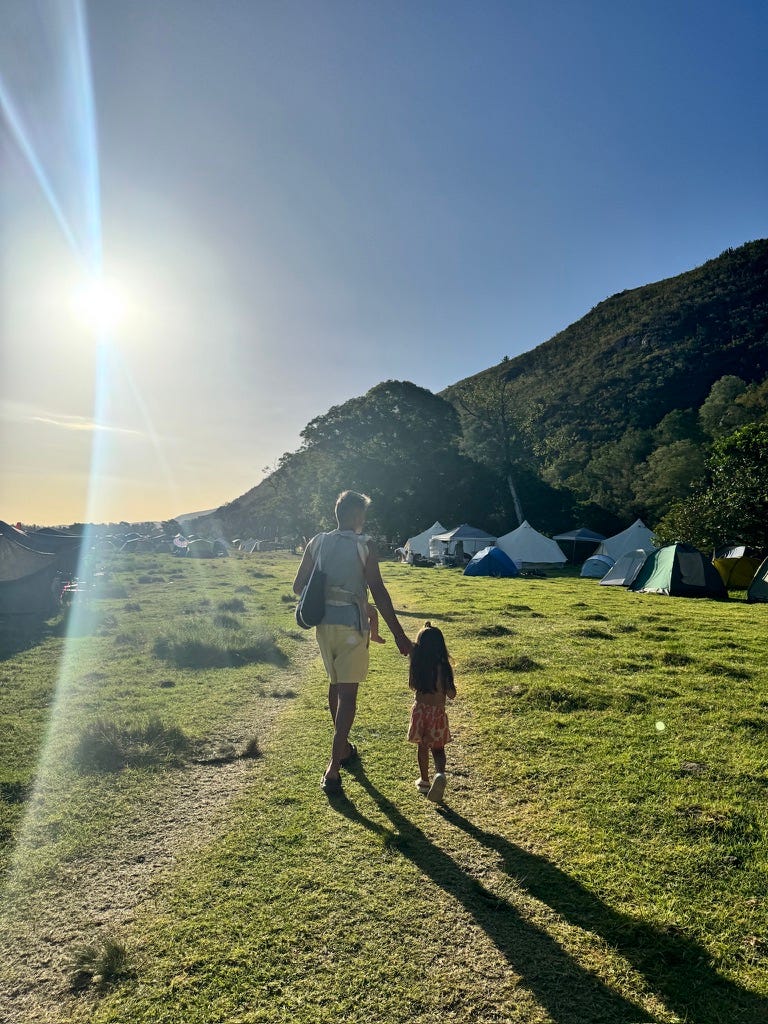
My own circumstances shaped the path I walked. Retrospectively, I wouldn’t describe my early life conditions as ideal — yet I’ve found real peace with the family I was born into and the neighbourhood my crib stood in. But for my daughter and son, my wish is perhaps what many parents share: that they grow up in circumstances that are, in some meaningful way, better than mine.
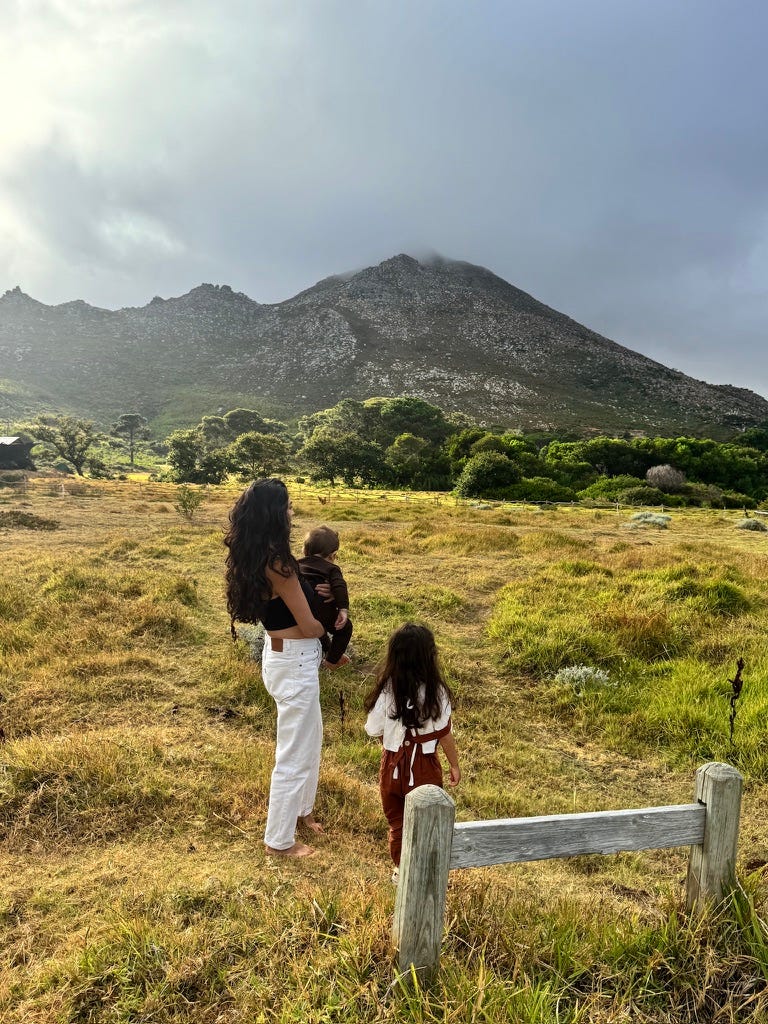
I want them to grow up closer to nature. To learn to be in connection with the elements. To move through the world with a gentler pace, with self-compassion, self-worth, and self-esteem. Not to be seduced by comparison — who has the better clothes, who has more things — but instead by what genuinely interests them. To be shaped by an environment built on connection, collaboration, and contribution. A way of living that is less about ego and more about community; less about accumulation and more about care.
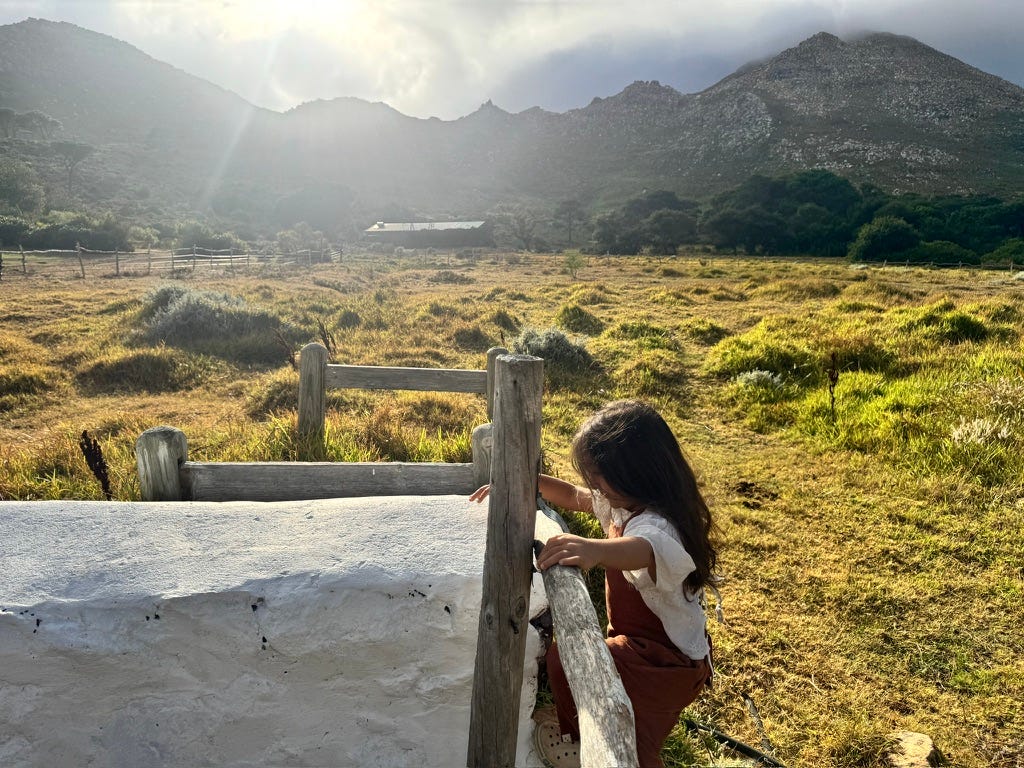
To figure out what’s best for them means I need to pause, listen, and pay attention. From there, I can notice what lights them up, when their eyes sparkle, and how I can serve as a guide rather than a director. Alongside that comes the importance of teaching discipline — that some things are worth doing even on the days you don’t feel like it. That love and mastery grow through repetition, not just through motivation.
It brings me to questions I keep turning over as we move into the future:
*What skills actually matter?*
*What relationship should they have with money?*
*How do they build confidence through trial and error in a world fixated on elements such as standardised exams?
Take financial literacy, for instance. I’m learning this now, and not having that grounding earlier has cost me. I grew up with an unhealthy relationship with money, a scarcity blueprint that kept me stuck in ways I didn’t fully understand until much later. I want my children to grow up with something healthier: a real relationship with money, with financial responsibility, with freedom and accountability.
Or take collaboration. When are we actually taught how to work with others? To understand what we’re good at, to know when to ask for help, to function as part of a team? I didn’t really learn this until university, and most of what I learned came from extracurricular activities, not the lectures. If I hadn’t escaped into them, I’m not sure I’d have discovered how much I love the work I do today.
This is why I find myself increasingly curious about different approaches to education — particularly those that take more courageous steps, such as unschooling and life-based learning.
To be clear: this is not a rejection of teachers or schools. I know there are extraordinary educators doing deeply meaningful work within the system: on the front line, helping children shine, maximising potential with the absolute minimum of resources. My exploration of different paths is not a criticism of them. It’s simply a preference and a wish to find a way for our own children that feels less rigid. More human. More aligned with curiosity, nature, movement, and real life.
One could argue that school is real life, and perhaps that debate deserves its own essay. While I agree that school is a social environment, my concern is whether it’s always a healthy and nurturing one.
The choices I make for my children, in these delicate, impressionable years, weigh heavily on my mind and heart. Not because I have the answers, but because I feel responsible for the questions I am imposing here.
For those who’ve read this far: thank you. This isn’t a manifesto or a conclusion, it’s thinking out loud. If something resonated with you or if you’ve wrestled with any of this yourself, I’d love to hear from you